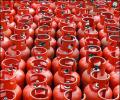
After making it available at petrol pumps, the convenient 5-kg cooking gas (LPG) cylinder will now be available at kirana stores and supermarkets in select cities.

Finance Minister Pranab Mukherjee asked all chief ministers to reduce state levies on diesel, kerosene and cooking gas to mitigate the impact of the price hike on the common man.

Government-controlled oil-marketing companies (OMCs) have held back petrol and diesel price revisions for a week and are expected to continue doing so, ostensibly owing to political reasons. It appears that the Centre has informally conveyed to the three major OMCs to not revise fuel prices for the time being, two people in the government said. This informal directive follows the talks between the Centre and states on cutting taxes and bringing the auto fuels under the good service tax regime not fetching the desired results, so far.

The company, which is also looking to strengthen its position in the sports utility segment, today launched the automatic transmission four-wheel drive version of its popular sports utility vehicle Captiva, priced at Rs 20.3 lakhs (Rs 2.03 million). He said the company will be launching an LPG-driven car in the first half of this year, without specifying details, adding it would be followed by other LPG vehicles.

Narendra Modi's landslide victory gives him the mandate to deregulate diesel prices as well as raise natural gas rates with a clear road map towards free pricing to cut subsidies and shrink the budget deficit.
State-run Indian Oil, Hindustan Petroleum and Bharat Petroleum are projected to lose Rs 1,28,135 crore (Rs 1,281.35 billion) on fuel sales this fiscal. IOC, BPCL and HPCL lost Rs 92,853 crore (Rs 928.53 billion) on fuel sales (audited figures) in April-September and are projected to lose Rs 35,282 crore (Rs 352.82 billion) in the second half of 2008-09 fiscal.
"At the moment there is no proposal before us for reducing prices," petroleum secretary R S Pandey told reporters in New Delhi. State-run oil retailers have started making profits on sale of petrol and diesel, but continue to incur hefty losses on domestic LPG and kerosene.
The Indian Oil Corporation has taken a hit of about Rs 1,000 crore (Rs 10 billion) in the first quarter of the current fiscal on selling subsidised LPG and Kerosene below the cost.

Petrol price can go down to Rs 75 a litre across the country if brought under the ambit of the Goods and Services Tax (GST), but there is a lack of political will, which is keeping Indian oil product prices at one of the highest in the world, economists at SBI said on Thursday.

The protesters led by the state unit Bharatiya Janata Party chief C P Thakur burnt the effigy of the prime minister at the busy Dak Bungalow roundabout.
The government has set up a committee to work out sharing by producers and retailers the losses likely to accrue from the decision to freeze LPG and kerosene price for a year despite rising cost.\n\n\n\n
The government on Tuesday hiked the prices of petrol by Rs 2 per litre and diesel by Re 1 per litre, besides raising domestic cooking gas LPG prices by Rs 20 a cylinder in Delhi.
State-run fuel retailers are losing about Rs 135 crore (Rs 1.35 billion) per day on sale of petrol, diesel, LPG and kerosene and the government is looking at proposals to make up for these losses, a senior official said.
"Oil companies are still losing money. . .Please pray that prices come down further so that we can consider reducing fuel prices," Petroleum Minister Murli Deora told reporters.

'I'm pitching India for the strengths we offer, including the English language, engineers, doctors, nurses, professionals, innovative talent of startups.'
With the government expressing its reluctance in raising prices of diesel and domestic LPG, the oil marketing companies may be forced to go for another round of increase in petrol price.
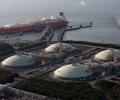
Around 15 years ago, when Reliance Industries (RIL) struck natural gas in the Krishna-Godavari (KG) basin off the east coast, the government made plans to supply that fuel cheaply to scores of generators that sprang up in India triggered by the discovery. Most of the plants, which account for 6 per cent of India's total generation capacity, operate sparsely after the KG-D6 area first failed to meet production targets, and then finally shut shop. Affordable domestic gas was why those thermal plants came up and the rate of the fuel today is why those generators hardly operate. Record liquefied natural gas (LNG) rates may yet again unravel India's ambitions to expand use of gas in industries, households and vehicles. Rates, while volatile, may stay strong this decade as developed nations with higher purchasing power embrace gas as the transition fuel.

Congress leader Rahul Gandhi on Wednesday slammed the government over the rising price of domestic cooking gas, diesel and petrol, and alleged that an amount of Rs 23 lakh crore has been earned by increasing prices of these commodities in the last seven years.
The Left parties on Friday asked Prime Minister Manmohan Singh for a rollback in petroleum prices and said the Budget should conform with the Common Minimum Programme.
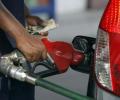
Petrol and diesel prices were hiked for the fourth consecutive day on Saturday by 35 paise per litre, pushing the total increase in rates on petrol to Rs 36 per litre and on diesel to Rs 26.58 since early May 2020 when taxes on the two fuels were raised to record levels. Petrol in Delhi now costs Rs 107.24 a litre and diesel comes for Rs 95.97, according to a price notification of state-owned fuel retailers. The latest increase that follows the unrelenting hike in international oil prices has pushed pump rates across the country to their highest-ever levels.
The EGoM was originally scheduled to meet on Wednesday but has been deferred because of non-availability of certain ministers in the grouping.
The government has no plans to increase petrol and diesel prices even though international crude rates have touched $100 per barrel, Oil Minister S Jaipal Reddy said in Panipat on Tuesday.
According to reports, the price of petrol is expected to go up by Rs 5 and diesel by Rs 6.
Close on the heels of steep increase in diesel price and cap on supply of subsidised LPG, President Pranab Mukherjee on Monday said greater alignment of domestic rates with global prices was in the interest of both consumers and investors.
Diesel prices should be immediately hiked by Rs 4-5 per litre, the Kirit Parikh Committee has recommended while favouring continuation of existing pricing principles for controlled petroleum products.

The smaller cylinders will be sold at market rates.
It will soon be two years since petrol was decontrolled, but few will happily celebrate this second birthday.
"Petroleum Ministry has moved a Cabinet note for raising fuel prices but a decision will depend on what allies of the ruling alliance say," an official said.
Indian Oil Corporation sought an increase in prices of petrol, diesel, domestic LPG and PDS kerosene on Tuesday as spiralling global oil prices had put "enormous" burden and may result in a revenue loss of over Rs 8,500 crore (Rs 85 billion) this fiscal. While the government and oil companies were bearing their share of the burden, the consumers have so far been spared from any hike in fuel prices despite crude oil touching a historic high of $93 per barrel.
Prime Minister Manmohan Singh on Tuesday said that diesel prices too will be freed from government control as part of 'much-needed reforms', but LPG and kerosene will continue to be subsidised.
Officials from State-run refiners contend that savings from purchase of Russian oil are used to offset a part of the losses in revenues from selling transport fuels and LPG at State-set rates.
The Oil Ministry has proposed a Rs 3-4.50 per litre hike in diesel price and Rs 100 in LPG rates along with raising the number of subsidised cooking gas cylinders for households to nine a year from the current cap of six.
If popular is white and populism black, then Mamata Banerjee is a curious shade of grey that may be hard to spot in the colour charts.
Financial services majors Citi and HSBC said the long awaited government decision to hike fuel prices is a positive step, although it will fan the already high inflation and may not prevent fiscal slippage.
The government had last week hiked diesel prices by Rs 5.63 a litre and capped the number of subsidised LPG cylinders to six per family a year.
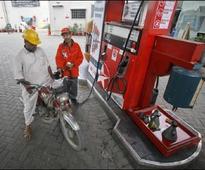
The government on Tuesday said it has agreed in-principle to deregulate diesel prices, but is not considering similar proposal for the cooking gas.
Unless the per barrel prices comes down to $67 level, the reduction in existing fuel prices, including petrol, diesel and LPG, should not be expected, Deora said while replying a volley of questions on whether the government would take a populist measure or reducing oil prices despite losses to oil marketing companies. Meanwhile, global crude oil prices today fell $10.52 at $96.37 per barrel in New York's main contract for November delivery.
Oil pricing freedom as an idea can succeed only if the ownership of the key oil refiners (read the public sector oil companies) ceases to be government-dominated.

Since August, petrol price has been cumulatively cut by Rs 9.36 per litre.
Low oil prices drove the growth in states' share faster than expected, says Abhishek Waghmare.
